a bit:
But there were yet other circumstances, including the double estrangement of those
who returned to metropolitan Britain, and the peculiar position of the British of
Ceylon, who could be described as ‘permanent boarders’ (p. 208). While expatriates
never see themselves as permanently stationed abroad, ‘boarders’ are by definition
people away from home, and ‘boarders’ defines an inherently non-settler condition.
Exploring the at times paradoxical circumstances, variety, ambiguities and contradictions
of the British experience abroad, this collection constitutes a crucial contribution
to the study of imperial mobility and to the consolidating field of settler colonial studies.
Filed under: Empire, Scholarship and insights | Closed
This paper argues that the early American republic is best understood as a constitutional experiment in “settler empire,” and that related migration policies played a central role in shaping collective identity and structures of authority. Initial colonists, along with their 19th century descendants, viewed society as grounded in an ideal of freedom that emphasized continuous popular mobilization and direct economic and political decision-making. However, many settlers believed that this ideal required Indian dispossession and the coercive use of dependent groups, most prominently slaves, in order to ensure that they themselves had access to property and did not have to engage in menial but essential forms of work. Crucially, settlers recognized that in order to sustain such a project of republican freedom and territorial conquest, they would need new migrants beyond the flow of English colonists. This promoted strong commitments to open immigration – but only from ethnically appropriate communities – as a central engine of settler development and expansion. Thus, although we often think of immigration and settlerism as competing national identities, I contend that for centuries the idea of the United States as a European immigrant nation – as well as the constitutional structures supporting that vision – was directly bound to settler needs and institutions.
Filed under: law, United States | Closed
bibliography of books and articles published in english on colonialism and imperialism in 2010
Filed under: Uncategorized | Closed
settler girls
Settler colonies and colonies of occupation, such as Canada, Australia, New Zealand, India, Ireland, South Africa, and the Caribbean, held out the possibility for girls to experience freedom from, and the potential to reconfigure, British norms of femininity. ‘Colonial Girlhood/Colonial Girls’ seeks to draw together international scholars for a multi-disciplinary examination of how colonial girlhood was constructed, and redefined, in both British and colonial texts and cultures. Since girlhood in the nineteenth and early twentieth centuries extends from childhood to the age of marriage, it represents a complex category encompassing various life stages and kinds of femininity, as well as differences based on class and race.
Colonial girls occupy an ambivalent and sometimes contested position in British and settler societies, They are sometimes seen as a destabilizing force that challenges conventional expectations of girls or as a disruption that can, and must, be contained. The emergent writings of British-born settlers about and for girls, which were usually published in England, contribute a further degree of complexity to the developing picture of the colonial girl. These texts both perpetuate and occasionally challenge British imperial and gender ideologies, reflecting loyalties torn between “home” and new dominions.
Across national boundaries, the malleability of colonial girlhoods is evident. In British print culture, Indian girls were often represented as victims of an unenlightened culture that offered poor educational opportunities, and Irish girls were frequently ‘hot-headed’ and untamed. In each national context, the workings of colonialism produced different models of idealised girlhood, from which Indigenous girlhoods were often marginalised.
more about the conference, here
Filed under: Call for papers | Closed
lorelle barry and catharine coleburn on insanity and ethnicity at the auckland mental hospital
This article examines Māori patients at the Auckland Mental Hospital between 1860 and 1900. We argue that the patient case notes reveal ‘European’ categories in which Māori were situated, and demonstrate the extent to which the authorities at the hospital grappled with their appearance, their language and their culture, all of which were elements of their ethnicity. We argue that the use of institutional case records is highly suggestive of some of the historical meanings of insanity for Māori, including the lack of detailed or sustained collection of information about patients’ tribal affiliations, the interest shown in their rights to land in maintenance payment inquiries, the experiences of cultural alienation or mate Māori, and the sad outcomes for Māori.
Filed under: New Zealand, Scholarship and insights, Science | Closed
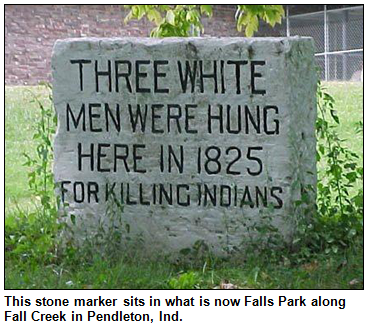
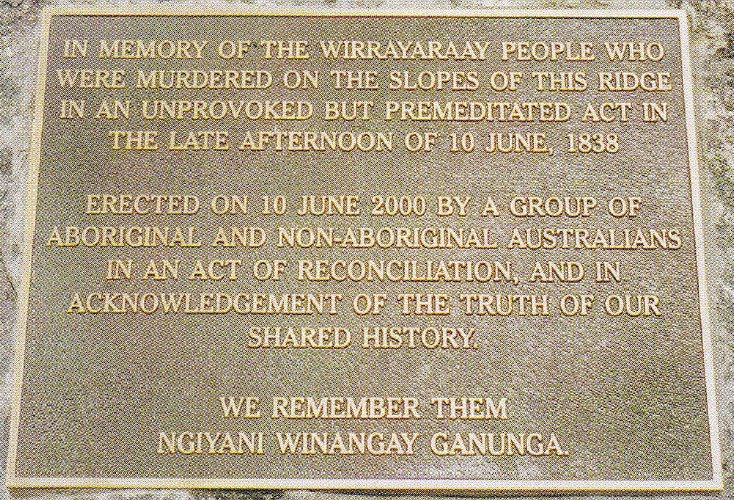
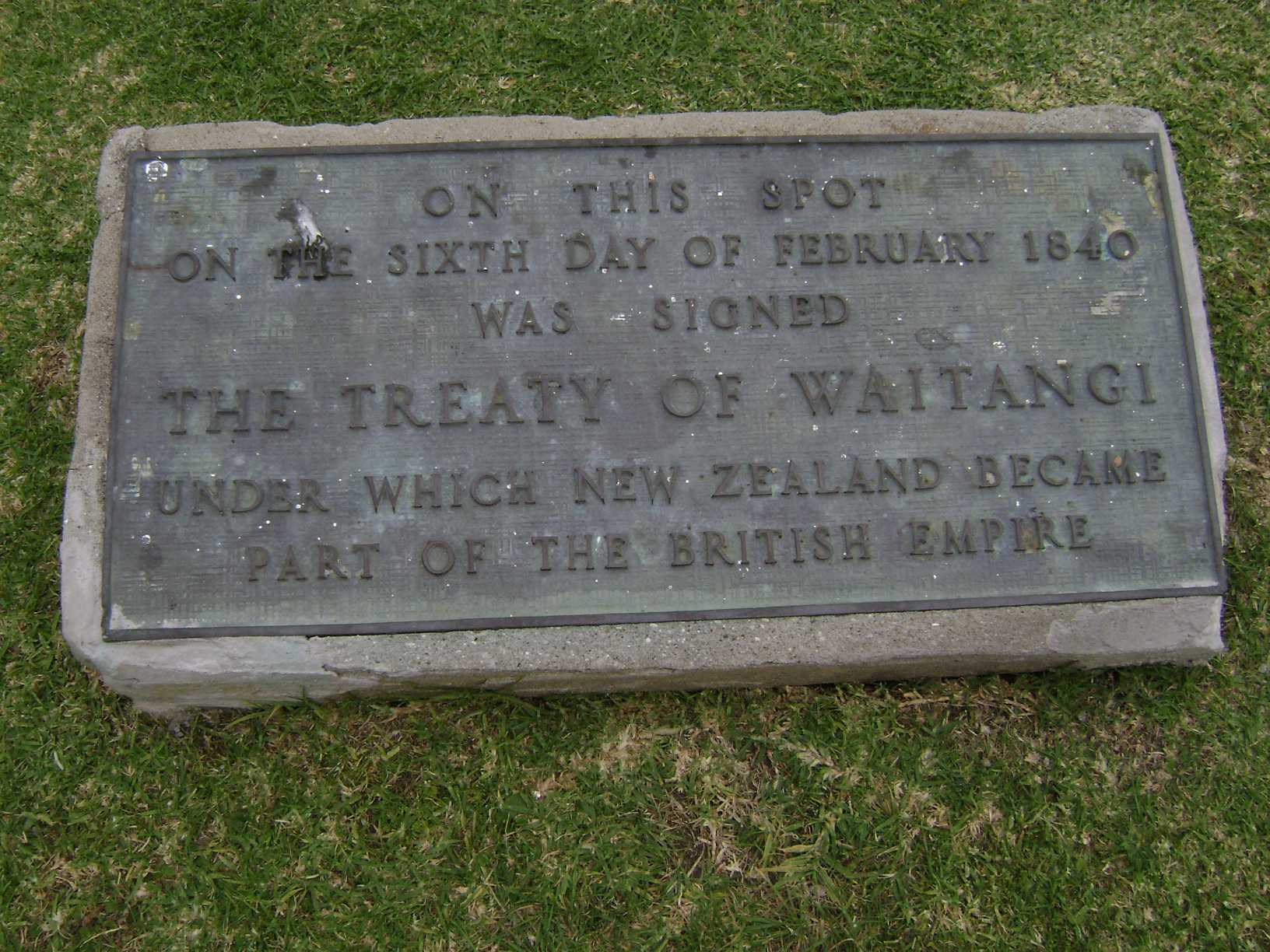
District 9 and Avatar are extraordinarily alike: both released in 2009, they tell a very similar story (even if they frequently invert the value signs). One would think that the scriptwriters have collaborated in some way. The first section of this paper analyses comparatively the two movies and identifies their common interests and a multiplicity of crucial differences. This comparison registers an extraordinary thematic and narrative convergence as a premise for the argument that is presented in the second section: in spite of their different approaches both movies present inherently settler colonial stories.
Filed under: media, Scholarship and insights | Closed
The popular term ‘land grabbing’, while effective as activist terminology, obscures vast differences in the legality, structure and outcomes of commercial land deals and deflects attention from the roles of domestic elites and governments as partners, intermediaries and beneficiaries. This paper summarises initial evidence of the characteristics of recent acquisitions of public lands and land held under customary tenure in Southern Africa, and their distribution across the region. It draws attention to their diverse manifestations – to questions of size, duration and source of the investments; the commodities and business models through which they are implemented; the tenure arrangements and resources accessed; the terms of leases and compensation; the degree of displacement; labour regimes and employment creation; and changes in settlement and infrastructure. The article proposes a schematic analytical framework for distinguishing between different types of land deals and considers the implications for unfolding and future trajectories of agrarian change.
Filed under: Scholarship and insights, Southern Africa | Closed
Although most historical studies of the Pequot War acknowledge the existence of a trade alliance between the Pequots and the Dutch preceding the outbreak of the English-Pequot conflict, scholars have neglected to examine Dutch-Pequot relations in detail. Following a decade of material exchange between private traders and the Pequots, the Dutch West India Company (WIC) established a mutually beneficial trade alliance with the Pequots in 1626. When the relationship broke down in the early 1630s, WIC officials in New Netherland, distracted by personal and political feuds in the Dutch colony, were remarkably slow to repair the alliance. The inability of the WIC to restore stable relations with the Pequots drew the attention of the neighboring Puritan colonies, who coveted the fertile lands of the Connecticut Valley. By highlighting the complex role of the Dutch, this essay complicates our view of the Pequot War as an inevitable conflict between Puritans and Pequots.
Filed under: Empire, Scholarship and insights, United States | Closed
lorenzo veracini on settlerness
Lorenzo Veracini, ‘On Settlerness’, borderlands 10, 1 (2011).
Part of a larger project dedicated to a theoretical appraisal of settler colonial phenomena, this paper draws attention to the need to develop interpretative categories capable of accounting for the specificity of the settler colonial ‘situation’. In the first section, the paper suggests that settler colonialism establishes inherently triangular relations. It then goes on to argue that a fundamental disavowal of indigenous presences informs settler-indigenous relations. The final section suggests that settler colonialism is characterised by a libidinal economy that is ultimately incompatible with a colonial one. These structuring differentiations, it is argued, highlight the inherent difference between encounters in a colonial setting and encounters in a settler colonial one. While this ‘situation’ should not be seen as characteristic of a particular period or location, or necessarily restricted to the past (settler national independence, of course, does not discontinue settler colonial structures), this very cursory outline is primarily intended as a call for further research.
Filed under: Empire, Scholarship and insights | Closed

