chris tomlins on aziz rana
Though passionate, Rana is idealistic, not angry. No hectoring ideologue, he is, rather, a true believer in the promise of American freedom. That might make him naïve, but if nothing else he seems to understand what worried Whitman rather better than either of these interlocutors.
Filed under: Empire, law, Scholarship and insights, United States | Closed
This article examines the processes of British settlement in New South Wales through the lens of emigrant guides that were produced to attract newcomers to the expanding colony. The author identifies two main types of guide: the compilation – a collection of written information on the colony – and the more popular personal account – essentially a rant written by a bona fide settler. Both types tended to offer the prospect that one could choose what sort of settler they would become. Emigrant guides, it is argued, had a key imperial function of turning ‘frontiers into assets’.
Filed under: Australia, Scholarship and insights | Closed
This review seeks to engage two bodies of scholarship that have typically been analyzed as discrete areas of inquiry – environmental law and American Indian law. In the twenty-first century, native peoples’ involvement in environmental politics is becoming more assertive. In this context it is necessary to think about the impact indigenous involvement may have in shaping future U.S. environmental agendas and regulations. After briefly discussing the rise of environmental movements and environmental law in the United States, I turn to the historical treatment of native peoples and in particular the treatment of their natural resources. This historical backdrop is essential to understanding tribal status today under the Environmental Protection Agency, and the challenges some tribal governments now present to environmental exploitation and degradation by states and corporations. The review concludes by reflecting on the future of U.S. environmental law in the context of increasing pressure being exerted by international environmental law and global indigenous politics.
Filed under: law, Scholarship and insights, United States | Closed
Some time ago Patricia Monture told us that in her thinking equality was not a high enough goal. A feminism that failed to recognize the destructiveness of settler colonialism and to work towards Indigenous sovereignty and well-being was too small a feminism for Patricia. This issue of the Canadian Journal of Women and the Law is dedicated to Patricia Monture, a courageous scholar who led the way for so many of us over the last two decades. To honour her, we invite contributions on white settler colonialism. This issue seeks to profile the work of Indigenous scholars and scholars of colour. In keeping with Patricia Monture’s own contributions, we are especially interested in receiving articles that offer a feminist, anti-racist reading of Canadian settler colonialism in the areas of criminal justice, Aboriginal youth, education, and economic empowerment.
CFP, Canadian Journal of Women and Law
which I found about thanks to the Osgoode blog
Filed under: Call for papers, Canada, gender | Closed
This article examines the hidden history of criminal justice in late colonial Australia by focussing on Aboriginal inter se offending. Most Aboriginal defendants appearing in late colonial criminal courts were prosecuted for violent crimes against other Aboriginal people. The article explores how common such cases were and the degree to which the acknowledgment of cultural difference affected justice process and outcomes. The frequent invocation of ‘custom’ commonly led juries to recommend the mercy of the Crown to those Aboriginal defendants found guilty of committing a homicide. I argue that ‘custom’ was increasingly used by settler judicial processes as a shorthand way of explaining what was otherwise seen as unexplainable. In the twentieth century ‘custom’ would receive greater attention through the development of jurisprudence and policy around the idea of customary law.
Filed under: Australia, law, Scholarship and insights | Closed
In October 1846 a ten-year-old Aboriginal boy witnessed a large scale Aboriginal attack on a station north of Brisbane. Although he survived the attack, the boy had the terrifying experience of observing the brutal killings of his employer and acting guardian and a female station worker. From the very next day he was called upon to relive the attack for the inquest and between 1846 and 1854 he was a material witness, and in some cases the only witness, in one coronial inquest, three committal hearings and three Supreme Court trials of Indigenous men for attacks on Europeans. This paper shows how colonial law was effectively manipulated to suit frontier interests in these years.
Filed under: Australia, law, Scholarship and insights | Closed
Alan Lester, ‘Humanism, race and the colonial frontier’, Transactions of the Institute of British Geographers (2011)
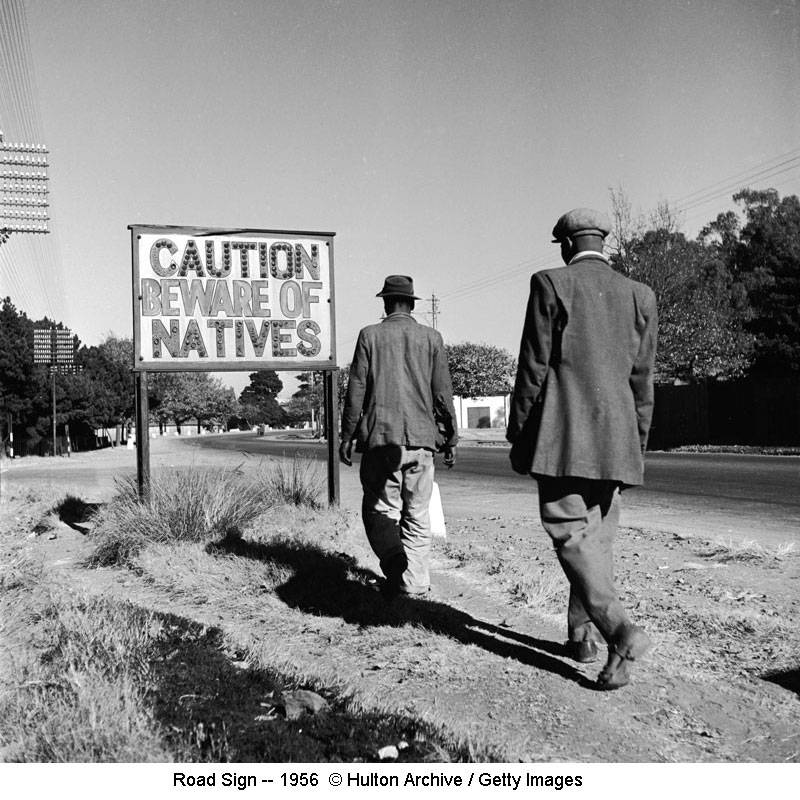
Beginning with an engagement with Kay Anderson’s recent post-humanist approach, I propose an alternative explanation for the rise of an innatist discourse of race around the mid-nineteenth century. I argue that the shift to innatist ideas of racial difference has to be seen as a matter of specific geographies of political contestation and trans-imperial mobilisation emerging in the spatial assemblages of colonial frontier zones during the early nineteenth century. I suggest that, aside from their violent struggles with indigenous peoples in these dispersed but interconnected locales, what prompted the refinement, dispersal and repetition of biologically determinist racial thought was emigrant British settlers’ mobilisation against the critique of fellow Britons inspired by a religious humanist doctrine of universality. This explanation shares Anderson’s focus on the affective realm of a colonial frontier, but it differs from her interpretation with its emphasis on the contested politics of colonial conquest and above all on the lingering political possibilities of humanism. In engaging with a specific post-humanist interpretation of innatism, this article seeks to address some of the implications of post-humanism more broadly for histories of race.
Filed under: Empire, Scholarship and insights | Closed
In 1973, the Supreme Court’s historic Calder decision on the Nisga’a community’s title suit in British Columbia launched the Native rights litigation era in Canada. Legal claims have raised questions with significant historical implications, such as, “What treaty rights have survived in various parts of Canada? What is the scope of Aboriginal title? Who are the Métis, where do they live, and what is the nature of their culture and their rights?”
Arthur Ray’s extensive knowledge in the history of the fur trade and Native economic history brought him into the courts as an expert witness in the mid-1980s. For over twenty-five years he has been a part of landmark litigation concerning treaty rights, Aboriginal title, and Métis rights. In Telling It to the Judge, Ray recalls lengthy courtroom battles over lines of evidence, historical interpretation, and philosophies of history, reflecting on the problems inherent in teaching history in the adversarial courtroom setting.
Told with charm and based on extensive experience, Telling It to the Judge is a unique narrative of courtroom strategy in the effort to obtain constitutional recognition of Aboriginal and treaty rights.
Filed under: Canada, law, Scholarship and insights | Closed
Jay Hammond, ‘Speaking Of Opium: Discursive Formations in Empire’. M.A. Thesis Dissertation (Columbia University Department of Anthropology, May 2011).
This thesis traces the social life of opium starting from the history of British colonialism in the eighteenth and nineteenth centuries on to settler colonialism in the United States (with frequent comparisons to Australia) at the turn of the twentieth century. This thesis has two aims. The first is to examine the ways in which discourses of crime, ownership and addiction – as manifest through intellectual property law, drug law, addiction therapies and advertising techniques – work to constitute opium as new objects such as oxycodone, heroin, morphine or Native American “Sagwas.” This is a gesture toward a counter history of these objects that challenges the notion that their differences from pure opium are merely on the basis of their chemical profiles. Through an unpacking of the discursive formations that work to constitute these objects in the United States, one discovers the ways in which they rely on the social formations of settler colonialism such as the logic of elimination. The second aim is to analyze the ways in which these discourses of crime, ownership and addiction in the United States were influenced by the historical foundations of eighteenth and nineteenth century British Colonialism. For example, while the “Indian medicine shows” of the turn of the twentieth century operated within a settler paradigm of elimination through cultural absorption and appropriation, they also relied on the opium that had been appropriated from India by the British a century before. This approach lays important groundwork for beginning to think the history of settler colonialism in the United States as situated within a dialectic relationship with the history of British colonialism.
Sounds like a fascinating entry point into an analysis of settler colonialism. To email the author, click here.
Filed under: Australia, Empire, law, Scholarship and insights, Science, United States | Closed

