waitangi and kenya
[the speaker] believed that a proposal had been made that the native reserves should be very greatly diminished. It was said that they should not keep natives in the reserves; that if they were allowed to remain in reserves they would not come out and work. He strongly protested against that argument. The natives of British East Africa were there long before we went there, and if the land belonged to anybody it was to the natives of that country. We had taken the country for good or evil, and we had done a good deal for the natives in the way of giving them security, law and order, and the opportunity to earn wages if they wished. We had given them many of the advantages of civilisation and also some of its disadvantages. But, as we had taken nine-tenths of their land from them, it was only fair that they in the House of Commons who had any say in the matter should preserve to these the land which yet remained to them. They knew what had happened when Crown Colony government ceased and self-government was given in certain Colonies. They knew that the Treaty of Waitangi in New Zealand guaranteed the lands forever to the Maoris and their children, yet the Maoris did not now own a quarter of the land which they used to do. The Waitangi Treaty had been absolutely torn up. He asked the hon. Gentleman to look very closely into any proposals that were made for a change in the land laws in British East Africa.
Wilfrid William Ashley in the House of Commons. He was a conservative MP, who had some close connections with Kenyan settlers (his daughter would marry the son of Lord Delamere, the settler leader).
Hat tip to Aaron B, who points us to this debate from 1908 on land tenure. Watch how it unfolds between Ashley and Cathcart Wason, mythbusting the plight of the Maori between them.
Filed under: Africa, New Zealand, Quote | Closed
Dan Freeman-Maloy, ‘Israeli state power and its liberal alibis’, Race & Class 52, 3 (2011).
This article explores the tension between Israeli state power and its presentation to the West in ostensibly liberal terms. The historical dynamics of metropolitan sponsorship of Zionist settler colonialism are briefly discussed before focusing on the ways in which the politics of artificial demographic management and pan-Jewish entitlement to Palestine are twisted into a conception of Jewish national self-determination that serves as a liberal licence for Israeli state crimes.
Filed under: Israel/Palestine, Scholarship and insights | Closed
In the current historiographical atmosphere, there seems little point for historians to continue pointing out the number of ‘ethnic’, ‘tribal’, ‘racial’ or ‘national’ groups within a confined space. In 1988, in what was quite clearly a re-iteration of a number of revisionist lines of enquiry that came before him, Martin Legassick claimed that all ‘attempts to differentiate Bantu-speakers from Khoisan, Khoikhoi and “San”, Sotho from Nguni, and, within each, subtribes from subtribes’ were utterly flawed, and few at the time — excepting those of the Oxford/’liberal’ school, perhaps — would have disagreed.
Recall the position of the Khoekhoe and the San in historical narratives at the time. Historians of the 1970s and 1980s tended to write of the Khoekhoe as a diverse collection of innovative herders who occupied Southern Africa for thousands of years, interacting with San hunters and eventually VOC society, but seldom anything for the era beyond that. With Britain’s decisive annexation in 1806 came the end of such a narrative. Thereafter, as Cape Coloured/Khoe-San indigenes (for the distinction between two major groups ‘Khoe’ and ‘San’ blurred as populations mixed and colonisation intensified, argued these scholars), their experiences were often homogenised and overlooked, or otherwise appeared only in a handful of studies on Cape policy, labour legislation and early missionary reservations. Pointing out the ‘tribal’ and ‘ethnic’ cleavages that separated Khoe-San South Africans in the period 1840-1950 was simply not a job for historians of South Africa to bother with. (‘Bantu’ South Africa would go onto receive a very different anthropological and historical appraisal, but that’s another story.)
For Legassick however, at this stage of his career under the heavy influence of a Marxist theoretical framework, only ‘the social relations of production’ united and differentiated communities — a picture which seems, to me at least, quite incomplete. Surely, the social relations of production were as much the cause, as they were the effect of politics organic to community and place. Surely, there was a thing called ‘discourse’ that operated tangentially to the realm of economic relationships.
All of this, of course, leads me to Landau’s historical-linguistical exploration of Popular Politics in the History of South Africa, 1400-1948 (2010). This is a major work, one that truly puts its readers to the test, by its frantic changing of lenses between the macro and the micro, and also, by its innovative use of language to make some pretty impressive historical arguments (the most ambitious of these, perhaps, his claim that ‘religion’ as a body of behavior and a concept in South Africa was created in the nineteenth century, and continues to leave a strange legacy today).
From the blurb:
Drawing largely from original sources, Paul Landau presents a history of the politics of the country’s people, from the time of their early settlements in the elevated heartlands, through the colonial era, to the dawn of Apartheid. A practical tradition of mobilization, alliance, and amalgamation persisted, mutated, and occasionally vanished from view; it survived against the odds in several forms, in tribalisms, Christian assemblies, and other, seemingly hybrid movements; and it continues today. Landau treats southern Africa broadly, concentrating increasingly on the southern highveld and ultimately focusing on a transnational movement called the ‘Samuelites’. He shows how people’s politics in South Africa were suppressed and transformed, but never entirely eliminated.
This book breaks important, new ground. It is no overstatement to suggest that it is not since the Comaroffs’ Of Revelation series that South African history has received a more sophisticated reworking.
Underlying each nuanced argument is the idea that highveld polities, in all their complexity and diversity, barely correlate with the ‘tribal’ titles that were attached to them. OK, OK, I hear you say, tell me something I don’t know. Well it’s more complicated than that, and there are implications for many scholars here.
Words used to differentiate ‘tribal’ affiliations were simply that – words – which may have conveyed political realities (albeit problematically), but always seemed to mis-communicate matters relating to culture, tradition and ‘the religious sphere’, and what’s more, they were titles that too often glossed over the hybridisation of lived experience. And many of these misinterpretations, Landau points out, continue to pervade historical and anthropological scholarship (and, though he doesn’t suggest as much, popular discourse as well). Thus, ‘[o]nce we stop thinking in terms of “peoples”, who had “beliefs”’, he argues, ‘the highveld’s political tradition, in its real situation in history, comes better into focus’ (248). He’s being modest. What also comes into focus are the many parallels between the pre-historic and the historic, the past and the present, and believe it or not, the black, the brown and the white of South Africa.
Hybridity is what Landau identifies left, right and centre, so much so that he uses the term ‘métis’ to refer to a number of people, the Griqua among them. This dialectal import may not be to the tastes of some South Africanists, but Landau has his reasons. Personally, it is my opinion that if Landau’s terminology encourages scholars to analyse the experiences of hybrid social and political formations from a number of settler colonial frontiers in comparative perspective, then I can only see positives coming from his use of such terminology.
There are a lot of limitations to what the historian, particularly the non-indigenous one, can get away with in their writing these days. After reading Landau’s book, there is an even greater interpretative anxiety that remains behind (particularly if one joins the dots and thinks about the politics of naming and labelling in the present day, in light of his discoveries).
What historians of South Africa can be certain about, however, is the sheer necessity of political mobilisation on the contested highveld, and the importance of selectively deploying key discourses already in circulation for political ends. These are things with which neither Legassick, nor the Comaroffs, would disagree though. What they probably would disagree with, however, is Landau’s time-frame, and his book’s biggest implication, namely, that the history of polities and politics in South Africa is a tale of continuity, one which doesn’t just ‘stop’ with the closing of the frontier zone or the coming of capitalism. The history of peoples is a very different one, Landau would insist — it is fissiparous, quite full of disjunctures, and it is one which too easily replicates the erroneous frameworks developed centuries ago by colonist-ethnographers: and from this critique many scholars, among them Isaac Schapera, and indeed the Comaroffs themselves, are not spared.
It is very much in this tradition that the new generation of historians of a region fixated upon a ‘Rainbow Nation’ mythology might best present their own research. But whereas Landau (not unlike the Comaroffs, actually) prefers to focus on the fickle and opportunistic convergence of politics and religiosity – and Legassick more polemically on the social relations of production before and amid the arrival of industrial capitalism – perhaps, I would suggest, we might focus more closely on the establishment and legitimation of polities, and the types of legal relationships which lay at the foundation of these polities. Law and history have converged elsewhere in settler colonial studies, yet in Southern Africa — with the exception of one or two pieces here and there — a scholarly pre-occupation with sovereignty, jurisdiction, crime, justice, the rule of law and the objects of war through time and space, has not yet taken shape.
Another of the stark historiographical differences which separates South Africa from other settler colonial locales is the methodology. The book touches on a number of the more complex debates in South African historiography, debates in which — remarkably — the analysis of language continues to takes centre stage, well after the linguistic turn. Elsewhere, historians of settler colonialism — perhaps from want of data? — mostly run scared from this kind of analysis. A mono-lingual outsider to South Africa, I began to find the list of new words and ambiguous meanings very challenging, verging on the tedious in fact. South African nationals however, SeSotho speakers in particular, probably won’t, and may get even more out of this book than I did.
Ed Cavanagh
Filed under: Scholarship and insights, Southern Africa | Closed
raipon
Ассоциация коренных малочисленных народов Севера, Сибири и Дальнего Востока Российской Федерации
Russian Association of Indigenous Peoples of the North, Siberia and the Far East.
Filed under: Europe, Website | Closed
aboriginal history 34 (2010)
Aboriginal History 34 (2010), available online at the ANU E-Press.
- Why didn’t you listen: white noise and black history
- Controlling marriages: Friedrich Hagenauer and the betrothal of Indigenous Western Australian women in colonial Victoria
- Shamrock Aborigines: the Irish, the Aboriginal Australians and their children
- Defining disease, segregating race:Sir Raphael Cilento, Aboriginal health and leprosy management in twentieth century Queensland
- Their Darkest Hour: the films and photographs of William Grayden and the history of the ‘Warburton Range controversy’ of 1957
- Pamela Faye McGrath and David Brooks
- A short history of the 1948 Arnhem Land Expedition
- Aboriginal Enterprises: negotiating an urban Aboriginality[1]
- ‘It will enlarge the ideas of the natives’: Indigenous Australians and the tour of Prince Alfred, Duke of Edinburgh
- The etymology of Coober Pedy, South Australia
Filed under: Australia, Scholarship and insights | Closed
friends at last
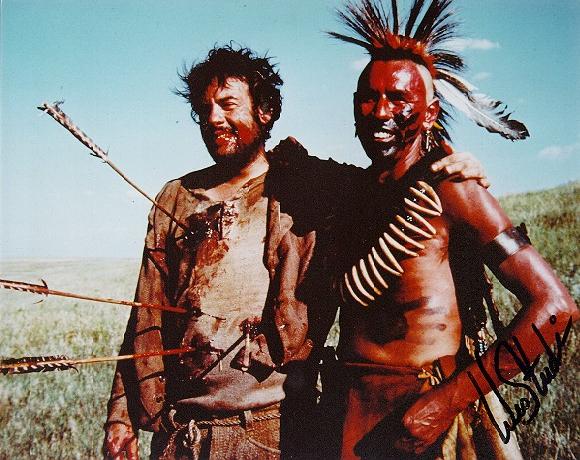
From the set of Dances with Wolves.
Hat tip, Rob A.
Filed under: United States | Closed
‘sacred site toilet’
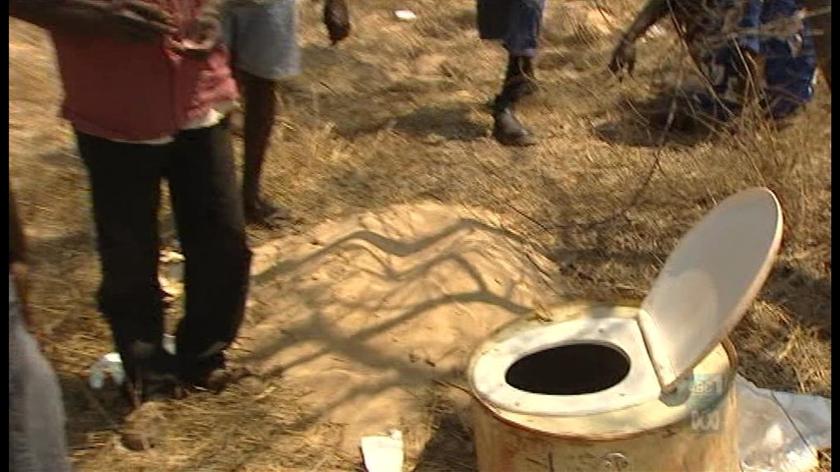
The Aboriginal Areas Protection Authority has lost its Supreme Court appeal against a company that built a toilet on a sacred site, reports ABC News.
Filed under: Australia, law, Political developments | Closed
In recent years across a range of disciplines, empire has become a paradigm for rethinking a globalized world. In this context, the University of Aberdeen is pleased to advertise a number of Masters (fees only) and Doctoral (fees and partial maintenance) Studentships within a broader interdisciplinary project on the ‘Ideas, Practices, and Impacts of Global Empires’. This brings together a supervisory team drawn from History, Anthropology, Hispanic Studies, International Relations, and the University’s museums. Within the project, we are interested in a number of themes: cross cultural encounters and collecting; material culture and visual representations of encounters; trade, migration, and empire; the ideologies of empires; and resistance and the ends of empires. Our areas of focus include: the British and American empires (especially Canada, the American South, South Asia, South Africa and the Antipodes); empires past and present in Latin America; Holy Roman Empire; modern German empires within and beyond Europe; Russia, especially Soviet Russia, including Russian informal empires; and competing imperialisms in East Asia. We invite applications from candidates with research interests (interdisciplinary or within the disciplines named above) touching one or more of these themes and areas.
Available studentships
3 x Home Fees PhD Studentships
2 x Research Preparation Masters Studentships
In addition, the committee awarding studentships for the project will be able to allocate some funds towards maintenance.
Hat tip, John R.
Filed under: Empire, Scholarship and insights | Closed
A Newcastle University Professor says there is much to learn from Europe’s indigenous entrepreneurs when it comes to small business and the economy.
Professor Dennis Foley will spend several months in Ireland later this year, studying that country’s native community, known as the Travellers.
His research will investigate the similarities between the Irish and Australian indigenous cultures and possible synergies between the two.
Professor Foley says he will study the challenges the Travellers have faced and the ways they have remedied the problems to bring about business opportunities.
From ABC News
Filed under: Australia, Éire, media, Scholarship and insights | Closed
Joanna Cruickshank, ‘Race, History, and the Australian Faith Missions’, Itinerario 34 (2010).
Abstract:
In 1901, the parliament of the new Commonwealth of Australia passed a series of laws designed, in the words of the Prime Minister Edmund Barton, “to make a legislative declaration of our racial identity”. An Act to expel the large Pacific Islander community in North Queensland was followed by a law restricting further immigration to applicants who could pass a literacy test in a European language. In 1902, under the Commonwealth Franchise Act, “all natives of Asia and Africa” as well as Aboriginal people were explicitly denied the right to vote in federal elections. The “White Australia policy”, enshrined in these laws, was almost universally supported by Australian politicians, with only two members of parliament speaking against the restriction of immigration on racial grounds.
Filed under: Australia, Scholarship and insights | Closed

