Judy Rohrer, Haoles in Hawaii (University of Hawai’i Press: Honolulu 2010)
Haoles in Hawai‘i strives to make sense of haole (white person/whiteness in Hawai‘i) and “the politics of haole” in current debates about race in Hawai‘i. Recognizing it as a form of American whiteness specific to Hawai‘i, the author argues that haole was forged and reforged over two centuries of colonization and needs to be understood in that context. Haole reminds us that race is about more than skin color as it identifies a certain amalgamation of attitude and behavior that is at odds with Hawaiian and local values and social norms. By situating haole historically and politically, the author asks readers to think about ongoing processes of colonization and possibilities for reformulating the meaning of haole.
Filed under: Hawaii, Scholarship and insights | Closed
No abstract; snipping here:
The historiography of the Neglected Tribal Sovereigns and Missed Opportunity seeks to put Australian history onto an axis of what I will be calling competitive autonomies. This, as I explain below, is a history of the sovereign-self narrated by reference to its engagement with other sites of political autonomy. It is not necessarily, though often is, a type of historiography framed in terms of a contest between claimed and distinctive sovereignties, but certainly it involves an encounter between distinct political communities with their own patterns and traditions of telling that community’s presence and journey through time and a particular geographical compass (usually meshing with the boundaries of the juridical state). To the extent that Anglo-settler Australia has generated a history of its sovereignty it has largely been a solipsistic one that does not engage with Aborigines as distinct political bodies. Through construction of a past in which there is political dialogue, engagement and deal-making between settler and Aboriginal polities, the implicit mission (I suggest) of Reynolds and Clendinnen is to facilitate a contemporary pattern of renewed pluralistic political relations. In this the construction of Aborigines into quasi-sovereign polities is not regarded as historically problematic. Further, since the history of inter-community political relations did not materialize, it must be constructed as a history of possibility that was either neglected or lost (but, inferentially, may be resumed). Australian history is being used implicitly to license a present state of affairs and to neutralize the feeling of strangeness that arises from a sense of national embarkation upon a ‘new’ history. The aim, as the very title Dances with Strangers itself suggests, is reassurance and validation, entrance into familiarizing choreographed ritual. That is hardly a subversive aim and one with which many of us have instinctive sympathy.
If that is the implicit mission of Reynolds and Clendinnen then it resonates with the historiography of New Zealand’s Waitangi Tribunal in the 198os. At that time, the jurisdiction of the Tribunal was in the process of being extended from the hearing of contemporary claims against the Crown to including historical claims. This extension of the Tribunal’s jurisdiction occurred in 1985 after the Tribunal had issued several reports that highlighted the artificiality of the distinction between ‘historical’ and contemporary claims. Moreover, these Reports had been so convincing and powerful in their description of the Crown’s cavalier treatment of Maori that wider public sympathy was secured. These Reports set the stage for the retrospective jurisdiction. They described the Treaty of Waitangi presentistly as a contract with a very contemporary doctrinal ring and by which the fairness of the Crown’s relations with Maori historical and contemporary fell to be assessed. The pre-contractual period was characterized as a ‘golden era’ in which Crown and tribe engaged in commercial and other relations on a basis of relative parity and political respect. The Tribunal was using an historiography that implicitly contemplated the renewal of political relations between Crown and Maori, comfortingly authorizing its own position as broker of the renewed and highly intensified dialogue that would come with the extension of its jurisdiction. As I will explain, that historiography has disappeared in the substantial body of Tribunal Reports since those early path-setting ones. But the history of renewed political relations that the 198os’ Tribunal was juxtaposing in retrospect and prospect did commence in the 199os. Unsurprisingly, it has been a modern history that it was easier to foreshadow expectantly in the mid-t98os than to experience so bumpily in the following decade and after.
Filed under: Australia, law, New Zealand, Scholarship and insights, Sovereignty | Closed
In the 1830s the British Colonial Office insisted that Aboriginal people be regarded as British Subjects in the hope that the ‘rule of law’ would provide them with protection against the excesses of the settlers. This paper tests the ideal of the rule of law against the realities offrontier violence. We argue that the effective application of the rule of law, in dealings with Aboriginal people, was a virtual impossibility, and offered them little protection. Perhaps the greatest irony of all is that the rule of law, unsupported by an adequate administrative machinery to ensure Britains effective occupation in frontier districts, was probably weakened by the few genuine efforts that were made to uphold it.
Filed under: Australia, law, Scholarship and insights, United States | Closed
For over three decades, western women’s historians have been working not just to challenge male biases within western history scholarship but also to create a more multicultural inclusive narrative. Paradoxically, however, the overarching narrative of western women’s history continues to sideline women of color and to advance a triumphalist interpretation of white women in the West. This essay argues that a multicultural approach has not provided an adequate framework for understanding women and gender in the American West. Instead, western women historians must “decolonize” our narrative and our field through seriously considering the West as a colonial site. To do so, we must employ the tools and theories that scholars of gender and colonialism worldwide have developed to analyze other comparable colonial contexts and projects.
Filed under: gender, Scholarship and insights, United States | Closed
Les personnes autochtones au Canada se sont lancées dans des centaines d’actions collectives. Utilisant la littérature sur les nouvelles et sur les événements collectifs, nous examinons d’une façon systématique les facteurs associés avec le nombre d’articles, leur placement sur la premiére page, et l’inclusion de photos. Nous trouvons que l’augmentation de la taille ou de la longueur d’un événement n’améliore pas sa couverture. Quand il s’agit de celle-ci, c’est uniquement la forme de l’événement qui compte. Certes, l’escalade de tactique accroít la quantité de couverture, mais c’est seulement les tactiques perturbatrices qui augmentent la couverture premiére page. Par contraste, ce sont principalement les routines de nouvelles du média et pas par les tactiques de la part des activistes qui déterminent l’inclusion d’une photo.
Indigenous peoples in Canada have engaged in hundreds of collective action events. Drawing on the news as organization and collective action literatures, we conduct a systematic examination of coverage across events, and we assess the factors associated with the number of articles, front page placement, and the inclusion of photographs. We find that increasing the size and the length of an event does not improve coverage. The latter is determined exclusively by the form of the event, and it is disruptive tactics alone that increase front page coverage. The inclusion of pictures, however, is largely determined by media news routines rather than by activists tactics.
Filed under: Canada, media, Scholarship and insights | Closed
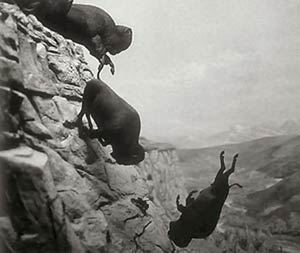
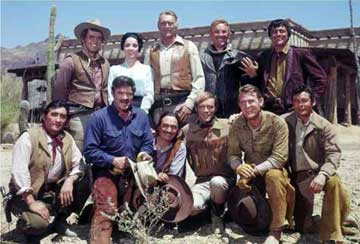

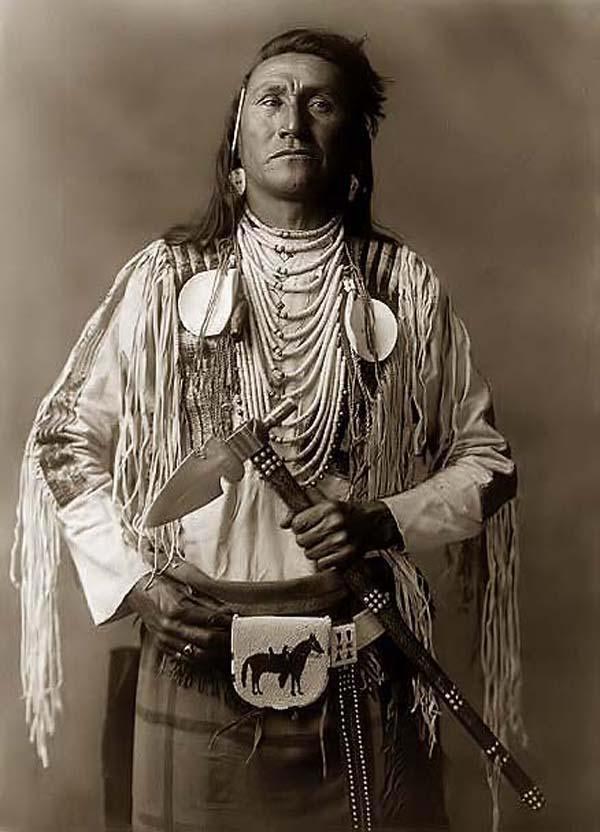

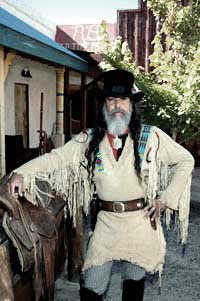



A whole archive of this stuff here (‘the old west is a time and a place of heart’)
which I stumbled across courtesy of Unauthorised History
Filed under: United States, wacky | Closed
Ezequiel Mercau, ‘Abandoned Britons? The Sunningdale Agreement and Ulster Britishness’. MA Thesis, University College, Dublin, 2010.
The Sunningdale agreement was a very important effort to establish power-sharing in Northern Ireland, the first one since the creation of the State. This dissertation charts unionist reactions from its emergence at the end of 1973 to its demise in May 1974 through the lens of Stuart Ward’s ‘abandoned Britons’ model. More specifically, it analyses to what extent they can be viewed as the impact of the processes that led to the end of empire and the break-up of Greater Britain on the United Kingdom. There is, therefore, a twofold purpose to this thesis. On the one hand, it seeks to place the Northern Ireland conflict in the wider context of the post-war transformation of Great Britain, while, on the other, it explores to what extent the events in the Province followed a similar pattern to that of the White Dominions.
Two major research areas are blended together here, namely the Northern Ireland conflict – especially from the unionist perspective – and the end of the British Empire. Certainly, much has been written on both topics; nonetheless, this study seeks to introduce a new approach to them by combining both topics in the light of the ‘abandoned Britons’ model. A number of previous studies on these matters need to be mentioned here in order to locate this dissertation in the literature. Due to space constraints, however, a selection of them, grouped around the major lines of debate surrounding the topic of this dissertation will be considered here. A very important field of debate in this context concerns the impact of colonialism in Ulster. Two schools can be identified in this area. One of them, represented by Clayton, Miller, MacDonald, Lustick, Weitzer, Cleary and Howe, argues that it is very important to consider the legacy of settler-colonialism in Northern Ireland in order to understand the beginnings of the conflict as well as its persistence. The other one, supported by scholars such as Walker and Ellis, disagrees with this view, arguing that the colonial model seems too contrived for Ireland, as the differences between it and other cases around the world far outweigh the similarities.
A second field involves the impact of British policy on Northern Ireland. At one extreme, authors such as Farrell and de Paor maintain that the conflict in Ulster was one of British imperialism. In sharp contrast with this view, another school, whose leading advocates include Cunningham, Coulter, Dixon and Peatling, suggests that Britain’s Ulster strategy during the conflict was characterised by consistency and continuity, treating Northern Ireland as a ‘place apart’ and prioritising the attainment of peace and harmony above all other objectives. This analysis, nonetheless, is opposed by O’Malley, who argues that Westminster, in lacking continuity in its policy, had an adverse effect on the conflict.
Filed under: Éire, Empire, Scholarship and insights | Closed
CFP/Conference: Borderlands and Meeting Points, Brown University, Rhode Island, April 8-9 2011.
CFP/Journal: Journal of Postcolonial Theory and Theology.
CFP/Conference: Spanish Borderlands/Spanish Colonial texas, Texas State Historical Association, 2012.
CFP/Journal: Journal of Commonwealth and Postcolonial Studies on Australian Literature.
Seminar: Colonial Science and its Histories, Oxford, London, October 8 2010.
CFP/Conference: Building an American Empire, 1763-1861, Oxford UK, 17 May 2011.
CFP/Conference: Origin Stories: Narratives of North American Diversity, Illinois, 20 December 2011
CFP/Conference: Colonial Development, 1929-1962, University of York, UK, July 2011.
CFP/Conference: Geographies of Power: mapping Indian borders, University of Florida, Oct 28 2010.
Filed under: Call for papers | Closed
This state’s official name — The State of Rhode Island and Providence Plantations — is more than just a mouthful. To many, it evokes stinging reminders of Rhode Island’s prime role in the trans-Atlantic slave trade.
Voters next Tuesday will decide whether to change the name by dropping the words “and Providence Plantations.” The issue has been debated for years, but lawmakers last year authorized a ballot question for the first time following an impassioned debate over race relations, ancestry and history.
via Yahoo News
Filed under: Political developments, United States | Closed
Just got word of a forthcoming conference via Legal History Blog:
Colonies and Postcolonies of Law, Princeton, March 18 2011.
The conference addresses the centrality of law in the construction of colonial rule. We aim to examine how colonial law emerged as colonialists interacted with diverse populations in the colonies. The study of the relationship between law and colonialism has taken two broad trajectories. On one hand, scholars have highlighted how law provided the instruments for the creation of the colonial state, allowing it to exercise a vast amount of power in restructuring the colony. Conversely, law opened up avenues of resistance for colonized populations. This conference aims to go beyond this dichotomy by focusing on law as a site of constant negotiation which produced new forms of bureaucracy and documentation practices. As colonial legal systems cast long shadows and formed the bedrock of the national legal systems today, this conference will also examine how these colonial legal regimes influence postcolonial nations. The last few years has seen a growth of interest in colonial legal history to which this conference hopes to contribute by bringing junior scholars together in conversation.
NYU Professor of History Lauren Benton will deliver a keynote address at the conference.
Defining Legality: Criminals, Outlaws and Rebels
New categories of legality emerged during the colonial period such that criminals and rebels became interchangeable notions. What makes a ‘rebel’ and a ‘criminal’? What counts as evidence of a crime? How were penal regimes created? How did colonial regimes contribute to the construction of the international laws of war and human rights?
Competing Legitimacies: Religious Law and Colonial Authority
The colonial state grappled with existing legal systems in the colony. Some systems were delegitimized while others were bolstered under the purview of colonial rule. By privileging certain forms of legitimacy, colonial states challenged traditional norms and institutions such as customary rights and religious laws. Why were certain legal systems granted legitimacy under the colonial rule? How did certain religious texts and figures emerge as more authoritative than others? How did the process of translation change understandings of key religious concepts? What forms of tensions were created between traditional authorities and the emerging modern legal profession in the colony?
Private Lives and Public Law
The modern colonial state crafted new boundaries between the public and private. For example, colonial projects of social reform transformed marital and kinship relations. How did the colonial legal regime come to delineate the private and the public sphere? How did colonized populations engage with this process of delineation? How did the changing legal order affect colonial subjects, in particular women, who often emerged as the sites for legal reform? Did postcolonial nations adopt colonial legal conceptions of the private and public spheres?
Constructing Borders
Colonial law demanded certainty of boundaries and jurisdiction, yet it operated within a plural legal order and had limited capacity to police frontiers. How were legal borders fixed? How did colonial populations choose between competing forums granted by neighboring jurisdictions? How did the emergence of the postcolonial nations complicate colonial mapping and
jurisdictional jostling?
Law and Capital
The centrality of trade and capital to the colonial project is increasingly overshadowed by cultural and social histories. Law, in the form of land revenue, forest laws and mercantile regulations, was in fact, central to the economic project of the colonial state. Can law be used to bring economic histories in conversation with the social and cultural? What economic practices came to be legitimized with the colonial reordering of the economy? How did colonial law engage with older kinship based mercantile networks such as those of the Arabs, Chinese, Parsis and Marwaris?
Sounds incredible.
Filed under: law | Closed

