Today in Canadian History CJSW.
Of course, I meant to say ‘Prince Charles II’, but the moment got the better of me.
Filed under: Canada, media | Closed
This essay argues that key to the longevity and protractedness of the Zimbabwe crisis was the internationalization of a problem characterized by multiple definitions and multiple actors with multiple interests and strategies. To this extent and from the beginning of the crisis, two schools of thought have contested each other for explanatory supremacy and each had its own disciples and adherents at local, regional and international levels. The essay pays particular attention to the pivotal actors at both the domestic and international levels before ending with a brief account and analysis of where Zimbabwe is today.
Filed under: Scholarship and insights, Southern Africa | Closed
Neve Gordon, ‘Democracy and Colonialism’, Theory and Event 13, 2 (2010).
For some time now I have been pondering the closely knit relationship between democracy and colonialism. Notwithstanding the widespread conception among democracy theorists that there is a contradiction between the two, in this paper I contend that colonialism has served as a crucial component in the historical processes through which modern democracies were created and sustained. Focusing on the production of “the people”—namely, those who are acknowledged as citizens and consequently have been granted the right to participate in political decisions—I maintain that colonialism has been deployed by democracy as a force that unifies, limits, and stabilizes the people within the metropole by employing violent forms of exclusion. And yet, unlike other forms of exclusion which have been deemed accidents or aberrations and regarded as symptoms of democracy’s evolutionary development, political scientists have often assumed that colonialism is totally alien to democracy and indeed antithetical to the two basic democratic principles: sovereignty of the people and equality.
I, by contrast, follow post-colonial theorists to argue that colonialism is a strategy employed by democracies (and, of course, other regimes) as a way of achieving not only geopolitical and economic goals, but also as a way of accomplishing social and political objectives within the metropole. Colonialism, in other words, also has a strategic role at home and the different forms of power that manifest themselves in the colony can be readily traced back to the democratic metropole. Moreover, the series of exclusions that colonialism produces are, I claim, part of democracy’s very logic and can operate in tandem with democracy’s basic principles. Insofar as this is the case, the democracy/colonial relationship can teach us something important about democracy for it reveals, using Michael Mann’s phrase, one of the dark sides of the so-called best possible regime. It underscores, for example, how democracy’s universalist and inclusionary claims are always bound up in colonial exclusionary practices that are implemented through the deployment of violence. My objective in this paper, however, is to further complicate this relationship by suggesting that the colonial practices and mechanisms deployed by democracies to limit and stabilize the people tend to return to haunt the democratic colonizers. Colonialism ends up engendering processes that destabilize the notion of the people and, consequently, produces a double movement that both contracts and extends democracy. What begins as a project of subjugation, may, at times, acquire an unexpected edge of inclusion.
[…]
Turning once again to the Israeli case, one finds that many on the political left currently claim that the two-state solution is passé. In other words, the solution whereby Israel withdraws to the pre-1967 borders and a Palestinian state is created in the West Bank, Gaza Strip and East Jerusalem cannot be implemented due to Israel’s project of settler colonialism that has led to the intricate interweaving of the two people—so much so that they cannot be separated. In Meron Benvenisti words you simply “cannot unscramble that egg.”
The claim, then, is that the only possible way to undo Israeli colonialism is through the one-state solution. There are, of course, two very different possibilities for this one-state solution. The one that currently exists is an apartheid regime, which will only become more manifest in the next decade as the Palestinian population becomes a majority within the territory Israel controls. The other is the bi-national democratic state, which entails the full incorporation of all Palestinians into the citizen bod (including those from the Diaspora who wish to return), some form of power sharing on the federal level between Palestinians and Jews and the adoption of a parity of esteem – the idea that each side will respect the other side’s identity, language, culture, and religion. In the context of our discussion, the bi-national one-state solution constitutes a radical extension of democracy by the dramatic broadening of the conception of the people.
It is unclear how events will unfold or how the situation will develop. One does know, however, that the bi-national one-state solution is gaining considerable grounds, so much so, that the NYT recently published an op-ed about it. Furthermore, the bi-national one-state solution has become one of the possible solutions to the conflict only because Israel’s colonial project has been so successful; over the past two decades, the Jewish settlers have penetrated so deeply into the Occupied Territories that in order to undo the colonization, Israel might indeed need to incorporate the colonized people. From a different perspective, the official Israeli government line considers the bi-national one-state solution an existential threat because it will destroy the existing conception of the people, and, consequently, may put an end to the current formation and conception of the nation.
Filed under: Israel/Palestine, Scholarship and insights | Closed
Abstract:
In this interview, a leading scholar of Indigeneity, Bonita Lawrence, discusses some of the crucial issues facing Native people in Canada today. She reflects on the denial of citizenship arising from the Indian Act’s definition of ‘Indianness’ – which, in Lawrence’s words, reduces cultural identity to racial identity. Also examined are the dilemmas of finding common ground between Indigenous struggles against the colonialism of the Canadian settler-state and the anti-racist struggles of Black people and other racialised groups. Exploring the interaction of Black and Indigenous peoples in Canada, it is argued, reveals the limitations of a superficial multiculturalism.
Keywords: anti-colonial resistance, anti-racism, Indian Act, Native identity, settler colonialism
Filed under: Canada, Scholarship and insights | Closed
paradoxes of iroquois passports
From the pen of Felicia Fonseca, via Associated Press
The team has maintained that traveling on anything other than an Iroquois-issued passport would be a strike against the players’ identity. But the British government wouldn’t budge in denying team members entry into England without U.S. or Canadian passports, keeping the Iroquois Nationals from competing at the World Lacrosse Championships in Manchester in the sport their ancestors helped create.
[…]
“You know that as a young person that you are sovereign, that you are not part of the United States,” he said. “We were the first people here.”
The National Congress of American Indians, based in Washington, D.C., has advocated on behalf of the lacrosse team, urging British officials to allow the members entry into England on their Iroquois-issued passports.
But some say the team’s adamant position has gone too far.
Michael Smith, a Navajo living on the Southwestern reservation, said it’s important to note that the Iroquois live in the U.S. on land he and his father fought to protect as Marines.
The Iroquois land isn’t recognized globally as a country, so the team’s efforts have been almost futile, he said.
“You’re flying overseas,” he said. “Get your U.S. passport and go kick some butt.”
Filed under: Canada, law, Political developments, Sovereignty, United States | Closed
state of origin’s poetic licence
Bravo. via Intertwingled
Australians all let us rejoice,
For we are young and free;
We’ve golden soil and wealth for toil;
Our home is girt by sea;
Our land abounds in nature’s gifts
Of beauty rich and rare;
In history’s page, let every stage
Advance Australia Fair.
In Daharug:
All of us mob are one and together,
we are friends and strong,
mother earth gives us good things,
we live between water,
there is lots for everyone
and is beautiful
as we go forward
take everyone with us
Filed under: Australia | Closed
a warning from the editor
This blog is going to be a little dead over the next three weeks.
Filed under: Uncategorized | Closed
heart of a continent
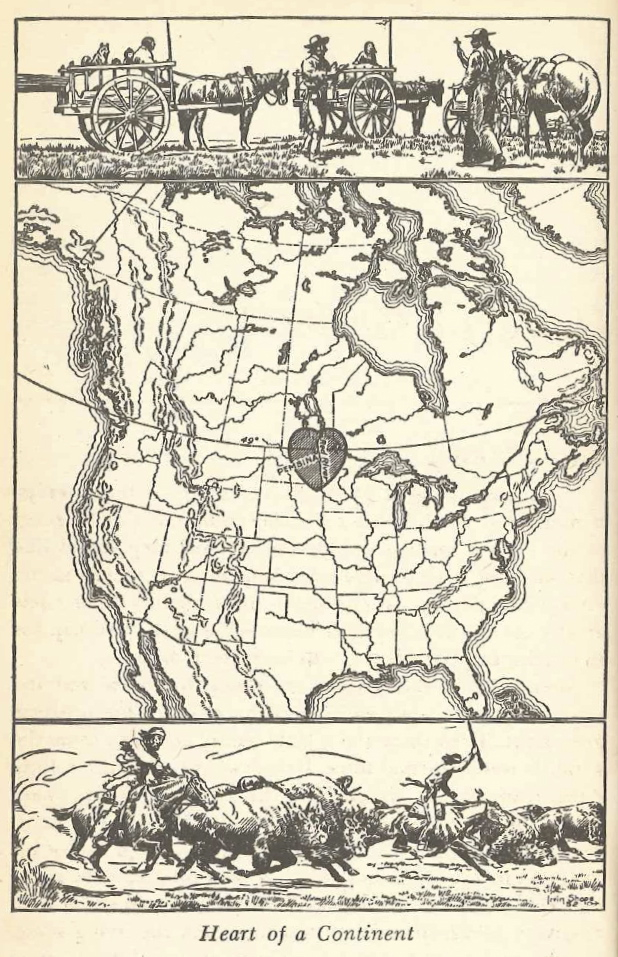
from Josephine Kinsey Howard's Strange Empire
Filed under: art, Canada, United States | Closed
Abstract
This essay argues that the new global regime of R2P bifurcates the international system between sovereign states whose citizens have political rights, and de facto trusteeship territories whose populations are seen as wards in need of external protection. Under the direction of the UN Security Council, the International Criminal Court has become an integral part of the international R2P regime by allowing for the legal normalization of certain types of violence (such as Western counterinsurgency efforts), while arbitrarily criminalizing the violence of other states as ‘genocide’. In place of this unequal global regime, the essay concludes by arguing for an internally-driven process of political reform and legal reconciliation, as pioneered in South Africa.
Keywords: Darfur; genocide; humanitarian intervention; International Criminal Court (ICC); sovereignty
Filed under: Africa, Genocide, law, Scholarship and insights | Closed
No abstract, so here is the intro:
The idioms and the methodologies of ‘Utopia’ have always been explicit and implicit in both projects of colonial acquisition and expansion, and in the differential projects of anti-colonial theory and practice. Yet there has never been an adequate commerce of ideas established between the respective contemporary fields of Utopian studies and postcolonial studies. However, in a recent essay in this journal, the postcolonial scholar, Bill Ashcroft, attempted to bridge the theoretical hiatus between the two fields. In ‘Critical Utopias’ Ashcroft essentially provides a literary critical mapping of how ‘the Utopian’ has figured in the literary art of Anglophone colonial, anti-colonial and postcolonial crucibles. Ashcroft’s summary Utopian/postcolonial survey takes its theoretical impetus, naturally enough, from a conversation between Ernst Bloch and Theodor Adorno in 1964, in which Adorno adumbrates the repressed knowledge that each individual harbours of a possible Utopia – we know that a better possible world exists, but we are ideologically persuaded that the possible is actually the impossible. In addition to foundational thinkers such as Bloch and Adorno, Ashcroft also enlists other theorists of the Utopian, including Herbert Marcuse and Fredric Jameson. The survey is not confined to theoretical utopias, however, as Ashcroft subsequently traverses a variety of historical times and spaces in divining traces of literary Utopian dynamism in colonial contexts. Invoked in this generous inventory are: Thomas More’s originary Utopia; Shakespeare’s The Tempest; and Defoe’s Robinson Crusoe – the latter two, of course, are representative of the Utopian colonial project, but are also read as texts that are capable of producing their own Utopian counter-narratives of anti-colonial resistance. In contemporary terms, Ashcroft straddles the Indian sub-continent; Africa and the Caribbean, specifically: Salman Rushdie; JM Coetzee; Edouard Glissant; Aime Cesaire; Derek Walcott; and Edward Kamau Brathwaite. Ashcroft’s intervention is distinguished by its concentration on what are, putatively, canonical texts of postcolonial literary studies. And while the species of utopia canvassed by Ashcroft is one that seeks to undermine the naturalised centrality of ‘History’ as discourse, there is an implicit assumption in such a parade of writers of a ‘postcolonial History’, or ‘postcolonial Tradition’ within its literary branch. Regardless of this initial point of contention, the virtue of Ashcroft’s essay is its dedication to the necessary relevance of Utopian literary critical; literary historical; and historiographical strategies to debates within postcolonial studies. Yet, as I have indicated, in this speculative initiative by Ashcroft these critical strategies seem to be predominantly confined to literary horizons and there is little engagement with neo-Marxist critiques within postcolonial studies itself. These features may be consequences of the fact that the range of Utopian theorists referred to may be foundational, but it is not extensive. While the employment of Bloch is naturally instructive and a contemporary Utopian critic such as Tom Moylan is summarily cited, there is no reference to seminal figures within the Utopian field such as: Lyman Tower Sargent; Ruth Levitas; Darko Suvin; Lucy Sargisson; Krishan Kumar; Barbara Goodwin; Gregory Claeys; Raffaella Baccolini and Vincent Geoghegan.
Finally, with respect to the postcolonial aspects of Ashcroft’s piece; the essay commits a familiar error of omission, one that seems to have been redressed in many publications on postcolonial studies but that does persist. The case of Ireland as either a Utopian, postcolonial or Utopian-postcolonial case-study is neither addressed nor alluded to at any stage. Such an oversight is disappointing given Ireland’s protracted colonial history and its exemplary role as an early twentieth century pioneer in anti-colonial theory and practice. Furthermore, Ireland has a distinguished history office Utopian writing, mythology and political philosophy, which would clearly enrich any discussion of the commonalities of the fields of Utopian studies and postcolonial studies. The purpose of the present essay is to respond to Ashcroft’s provocative critical alignment of the Utopian and the postcolonial, and to furnish necessary modifications and supplements to the argument developed therein. With this in mind, my argument will accent the inherently Utopian cast of much of the recent and ongoing literary historical; literary critical; historiographical; and theoretical writing within contemporary Irish postcolonial studies. In providing an effective metacritical survey of these Utopian-postcolonial vectors in Irish literary and cultural studies, this essay will address the implicated interdisciplinary projects that constitute the field of Irish postcolonial studies. The ensuing metacritique argues that not only are some of the major strands of Utopian postcolonial critique focused on interrogating the philosophical limits and lacunae of the contested legacies of ‘Enlightenment’ thought; British imperial discourses; and bourgeois Irish nationalism, but they are also involved in tracking the Utopian energies of subaltern Irish nationalisms and in retrieving the work and reputations of Irish anti-colonial thinkers, writers and activists in light of contemporary international postcolonial theory and activism. At root, the discussion displays the urgency with which postcolonial critics have approached, and attempted to appropriate, the Utopian dynamism of historical Irish anti-colonial thought and action in their own Utopian engagements with the prevailing political and economic conjuncture in Irish society. These projects are by no means homogenous and it is not to be concluded that they are easily woven together as fractions of a sanctioned critical consensus within Irish postcolonial studies. They are representative of a viable critical mass within Irish criticism that accepts the legitimacy of Utopian imagination, and that has gleaned valuable lessons from the historiographical, often subalternist, methodologies of international postcolonial studies. In sum, the present essay has a particular focus on matters that pertain to the utopic in terms of the literary historical and the historiographical within Irish postcolonial studies, and will, one hopes, catalyse future interventions that might engage with other facets of Irish colonial history and postcolonial criticism.
Filed under: Éire, postcolonialism, Scholarship and insights | Closed

