The following is a response to Neve Gordon’s paper on ‘Democracy and Colonialism’, from Theory and Event. It has been written by Lorenzo Veracini, and only appears here.
—-
This is a promising proposal for a paradigm shift: colonialism and democracy are not incompatible – they actually are a necessary prerequisite of each other: “Notwithstanding the widespread conception among democracy theorists that there is contradiction between the two, in this paper I contend that colonialism has served as a crucial component in the historical processes through which modern democracies were created and sustained” (p. 1). Of course, this insight, while convincing in relation to the French and British colonial empires, for example, is especially significant because it emanates from Israel, a situation where the two have been and currently are a visible function of each other:
The Israel case helps clarify theat the colonial project is not merely the other of democracy. On the one hand, Israel’s colonial project [Gordon here only refers exclusively to the occupation that begun in 1967] is deployed to limit and unify the people and in this way helps manage democracy’s precarious and unruly elements. On the other hand, Israel’s truncated racialized democracy serves to preserve its colonial project since […] democracy is incessantly utilized to extend, hide and legitimate a colonial regime based on violent domination. Democracy, we see, has deployed colonialism to circumscribe itself (i.e., by demarcating and stabilizing the people); colonialism has needed democracy to produce its legitimation (p. 2).
Crucially, however, Gordon believes that Israel is “a unique case”: “the democratic project and the colonial project coexist within a contiguous space” (p. 2).
I disagree: settler democracies routinely collapse the two “projects”; indeed one structuring difference between colonial and settler colonial formations is that the fundamental dialectic between metropole and periphery is erased in the latter.
Referring to the activities of settlers in the colonies of democratic regimes, Gordon notes that settlers routinely exploited the “freedoms and civil rights that were conferred on them as citizens of their democratic state of origin in order to subjugate and oppress the indigenous population in ways that settlers originating from authoritarian regimes could not”, and that this has been the case in Israel as well (p. 2). But he is comparing settler colonialism (a circumstance in which the settlers on the spot are in charge) and colonialism with settlers (a circumstance where the metropole is in charge of both the settlers on the spot and the indigenous people). While colonialism is only democratic in the metropole and exclusivist in the periphery, settler colonialism is by definition simultaneously democratic and exclusivist in a periphery that is no longer a periphery. Israel is not an exception in the context of democratic colonialisms; Israel is a settler democracy. Gordon understands colonialism, but does not get settler colonialism, which is a pity, considering where his insight emanates from.
Lorenzo Veracini.
Filed under: Israel/Palestine, Scholarship and insights | Closed
D’Arcy, Jacqueline. ‘The Same but Different’: Aborigines, Eugenics, and the Harvard-Adelaide Universities’ Tasmanian Historical Studies, Vol. 12, 2007: 59-90.
Abstract:
Norman B Tindale and Joseph B Birdsell visited Cape Barren Island (CBI) Reserve in January 1939, as part of the Harvard-Adelaide Universities’ Anthropological Expedition. The Expedition, it is argued, was the last major eugenic research project to be undertaken in Australia. This is demonstrated most poignantly through Tindale’s and Birdsell’s use of the CBI Reserve as an anthropological and eugenic laboratory. Although much has been written on eugenics and on mixed-blood populations in general, a significant gap exists in the historiography of the CBI Reserve in the 1920s and 1930s, and the Expedition there in 1939. Whatever the reason for its omission, it is important now to include it in the historical record, as the CBI Reserve Expedition of 1939 has significant bearing on current discussions about Aboriginality, and implications for Native Title.
This paper is divided into two sections. The first presents new research into the nature of various reports written about the Islanders during the 1920s and 1930s. The reports clearly reflect changes in contemporary Australian opinion regarding race and miscegenation – an opinion that was moving steadily away from a Social Darwinist explanation of the ‘half-caste problem’, towards a eugenic solution The second section of the paper focuses upon Tindale’s and Birdsell’s field journals and notes. For both men, the CBI segment of the Expedition would prove crucial in their decision to advocate ‘absorption’ as the solution to the “‘half-caste problem” of the 1920s and 1930s’.
Filed under: Australia, Scholarship and insights | Closed
Some recent essays from borderlands I’ve been spruiking here contribute to a recent special issue of borderlands. Here is the abstract to the editors’ introduction:
As Stuart Hall, following both Franz Fanon and Albert Memmi, has explained, identity is deeply imbricated with colonialism both for the coloniser and the colonised. Their cultures meet in what Mary Louise Pratt calls the contact zone. Inevitably, this meeting is in circumstances of great inequality. Nevertheless, the identities of both coloniser and colonised are shaped through their interactions, and this shaping continues in the postcolonial experience. In this issue of Borderlands the essays all share a common concern with identity. Moreover, in diverse ways all the essays are founded in issues of marginalisation, power and (post)colonialism.
Right on, borderlands. Check out the issue here.
Filed under: postcolonialism, Scholarship and insights | Closed
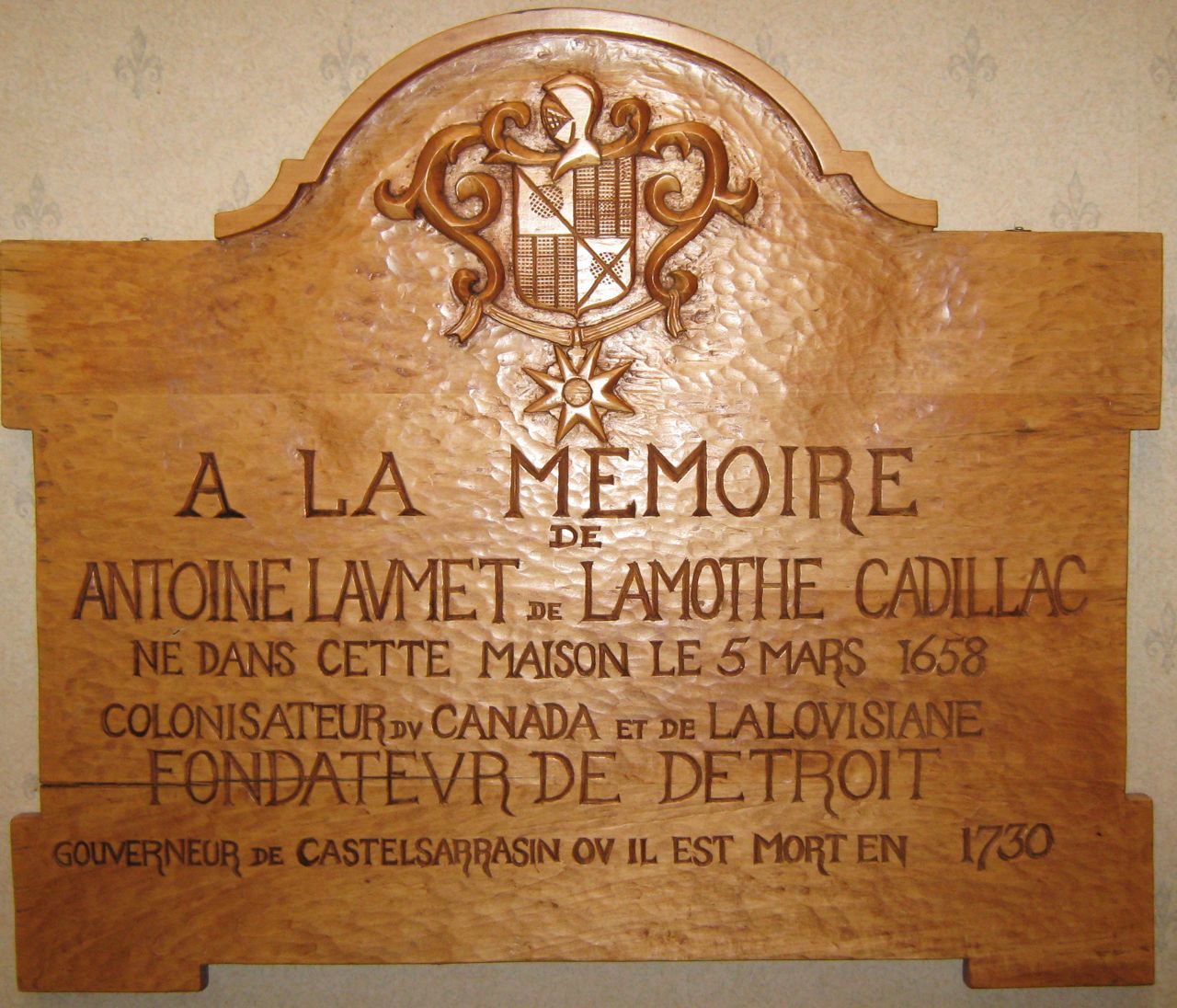
Leroux’s recent article on the commemoration of settler colonialism in Quebec reminded me of some photos I took… inside one of Montreal’s McDonalds restaurants.

Filed under: Canada, wacky | Closed
Darryl Leroux, ‘The Spectacle of Champlain: Commemorating Québec’, borderlands e-journal 9, 1 (2010)
This essay examines the process of foundation through which Samuel de Champlain’s public image as the founder of Québec has been instituted both historically and during Québec City’s 400th anniversary commemorations in 2008. Through analyzing the official commemorative event, Rencontres, I demonstrate how Champlain’s memory is deeply informed by spectacularized forms of politics. In particular, I argue that the Québec 400 places Champlain as the founder of a culturally diverse Québec by underlining the peaceful encounter between French colonizers and indigenous peoples. By relying on a strategy of familiarity that builds on the politics of spectacle and a semiotics of space, this discursive move solidifies the normative Québécois subject’s ability to legitimately manage national space and define its own boundaries. I end by arguing that commemoration stands out as an important technique of the nationbuilding project in Québec.
Filed under: Canada, Scholarship and insights | Closed
Judy Rohrer, ‘Mestiza, Hapa Haole, and Oceanic Borderspaces: Genealogical rearticulations of whiteness in Hawai‘i’, borderlands e-journal 9, 1 (2010)
We in the United States are living in a time of heightened racial awareness, tension, and conflict. One relevant area of research focuses on developing a more sophisticated understanding of whiteness, white identities, white privilege, and white supremacy. This essay is part of a larger project in which I analyze haole (whiteness and white people in Hawai‘i) as a neocolonial American form of situated whiteness. Here I explore some possible elements of a genealogical stance toward haole, understanding genealogy both in the indigenous sense of connection to people and place with its temporal and spatial fluidity, and in the poststructuralist sense of remaining attentive to our will to power, cautious of truth claims, and privileging of nondominant perspectives.
I weave intersectional and Chicana feminist theories with pieces of my own personal story, and hapa haole identity, putting theory to work troubling unified notions of haole. I discuss ‘home’ and ‘homeland’ as they relate to Hawai‘i and desires to belong. Mobilizing genealogy, I argue, remakes both haole and Hawai‘i as more verb than noun, opening up new possibilities for building social change. A genealogical orientation toward haole is not the final ground upon which haoles can solidly stand, rather it offers strategies for imagining and performing haole in more historicized, relational and contextualized ways.
Filed under: Hawaii, Scholarship and insights | Closed
Tony Barta, ‘REVIEW ARTICLE Genocide and Colonialism from New and Old Perspectives’, borderlands e-journal 9, 1 (2010).
A. Dirk Moses (ed), Empire, Colony, Genocide: Conquest,
Occupation, and Subaltern Resistance in World History, New York:
Berghahn, 2008.
John Docker, The Origins of Violence: Religion, History and
Genocide, Sydney: UNSW Press, 2008.
Robert Kenny, The Lamb Enters the Dreaming. Nathaniel Pepper and
the Ruptured World, Melbourne: Scribe, 2007.
Tony Barta
La Trobe University
Abstract
Some historians consider genocide an inappropriate concept in a colonial context. Yes, whole peoples disappeared under the assault of colonialism, but was that the intention? A misguided insistence on the evidence of words rather than actions does not dominate the many important contributions to the Moses collection with its impressive variety of examples and approaches. In Docker’s book the discussion of both words and deeds is extended back in time and opened to sophisticated interpretation. There is sophisticated interpretation of a different kind in Kenny’s extended case study. From outside the
context of genocide studies it speaks to key issues of destruction, adaptation and survival.
Filed under: Empire, Genocide, Scholarship and insights | Closed
This paper addresses the socio-spatial impact of the Zionists’ colonial project in Palestine, including
the replacement of the indigenous Palestinian people by Jewish immigrants. At present, the
Palestinians, displaced or living in the remaining part of Palestinian lands number approximately
ten million. Th e continuous Israeli occupation has failed to bring stability or prosperity to either
the region or the Israeli and Palestinian peoples. Projections indicate that demographic changes
will transform the current situation into an apartheid system, where the majority Palestinians
will be ruled by an Israeli minority. Th e objective of this paper is to suggest a just solution for the
Palestinian-Israeli impasse in advocating the establishment a one-state solution, a proposition
which appears to be gaining increasing support.
Keywords
Palestine; Israel; Colonial Project; Apartheid System; Changes on Land
Filed under: Israel/Palestine, Scholarship and insights, Southern Africa | Closed
Today in Canadian History CJSW.
Of course, I meant to say ‘Prince Charles II’, but the moment got the better of me.
Filed under: Canada, media | Closed
This essay argues that key to the longevity and protractedness of the Zimbabwe crisis was the internationalization of a problem characterized by multiple definitions and multiple actors with multiple interests and strategies. To this extent and from the beginning of the crisis, two schools of thought have contested each other for explanatory supremacy and each had its own disciples and adherents at local, regional and international levels. The essay pays particular attention to the pivotal actors at both the domestic and international levels before ending with a brief account and analysis of where Zimbabwe is today.
Filed under: Scholarship and insights, Southern Africa | Closed

